
Research / deep dive
Meta’s New AI Gadget Isn’t the Real Story
Meta’s Charm puts Muse within reach. But the real decision may be how much you’ll trust an AI to do on your behalf.
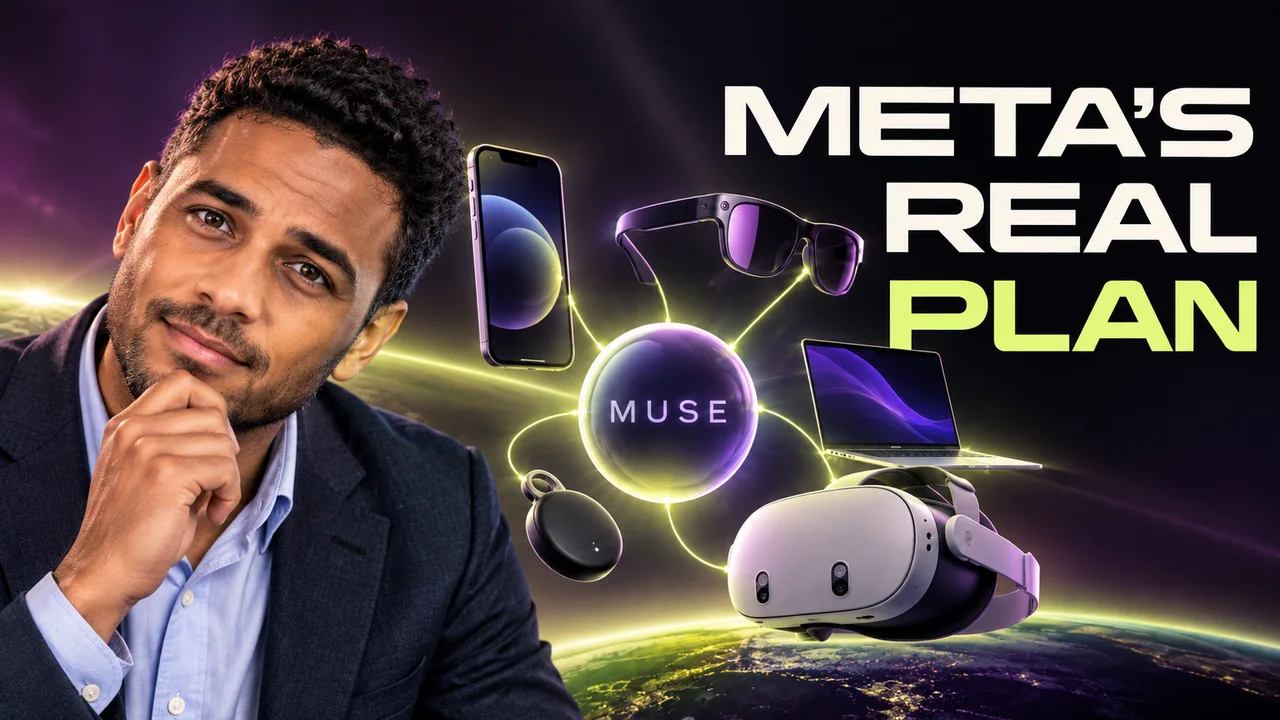
MerchSalon episode artwork · editorial illustration, not a product demonstration.
TAKE IT WITH YOU
Key takeaways
- The observed calendar exchange does not establish that a calendar entry was completed.
- The dentist example is a tester’s reported experience, not a MerchSalon demonstration.
- Judge the assistant by permissions, safeguards and confirmed outcomes—not simply a new device.
Why it matters
An assistant that acts needs more than a convincing answer. It needs the right permissions, useful safeguards, and a way for you to know whether the job was actually done.
Why carry another device?
Charm starts with a simple idea: make an AI assistant easier to reach. Pick up a small device, speak, and put it away. Less time navigating a screen. A more immediate way to ask for help.
But Muse—the assistant behind that idea—is also intended to be available through devices people already use. Your phone may be enough. That makes Charm an interesting opening to a bigger story: where AI assistants will live, and how much we will ask them to do. Sources: Meta’s announcement and keynote.
In Bloomberg’s reporting, Meta CTO Andrew Bosworth describes Charm as “not the core of the strategy.” That is a useful way to frame the episode. The hardware gets your attention. The assistant connects the pieces. Read the reporting.
From answering to acting
One tester describes asking Muse to find a dentist for his son. In his account, the assistant researched local offices, called to check insurance acceptance, and helped arrange an appointment without him picking up the phone.
That is a compelling example of assistance. It is also a reported experience. The cited segment is a verbal account, without a recording of the calls or a booking confirmation. We should not quietly turn it into a task that MerchSalon watched succeed. Check this claim.
The keynote offers a different kind of evidence. Zuckerberg asks for meeting time; the assistant identifies an opening and says it is adding it to the calendar. You can observe the exchange. You cannot see a calendar confirmation establishing that the action was completed.
The setup matters, too: the exchange follows an announcement about the glasses voice-AI experience. It is not a demonstration of scheduling through Charm. What was shown—and what was not.
One assistant, many ways in
Phones, computers, glasses, VR, and a small object you can carry: the episode follows the idea of Muse becoming available across everyday contexts. Announcements and ambitions do not establish that every capability is already working equally well on every device. Meta’s stated direction.
Our reading is that access matters. The easier it is to reach the assistant, the more likely it is to become the place you start a task. A dedicated device could offer another route to that relationship.
There is a platform question here as well. On phones, Meta still operates within systems controlled by Apple and Google. Its own hardware could give it additional ways to reach people. That is analysis, not Meta’s stated explanation for creating Charm. The basis for this interpretation.
When assistance becomes a transaction
The episode also follows the money. Meta says it plans to take a cut of transactions made through Muse, and Instacart has announced a shopping integration. Being the assistant someone asks first could have commercial value. An announced integration, however, is not proof of a real purchase completed in this episode. Partner announcement · Keynote source.
The stakes change when an assistant can spend money or work with sensitive personal context. Finding a dentist may require information about your circumstances. Buying something requires permission to make a financial commitment.
Meta describes purchase-by-purchase human approval and single-use payment credentials limited by merchant, amount, and time. It also says Muse conversations and the cloud workspace are separate from its advertising systems. These are meaningful stated safeguards, but the sources here are Meta’s own documentation. This story does not independently audit their implementation. Purchase safeguards · Privacy promise.
The question to take with you
Zuckerberg places this work within a longer-term ambition for personal superintelligence: an assistant that understands goals and helps people achieve them. The episode does not establish that Muse has reached that destination. Ambition versus present evidence.
For now, the practical question is smaller and more useful. What do you want an assistant to do? What must it know to do that? How do you confirm the result? And can the device you already own meet that need?
Charm makes AI assistance tangible. The larger choice is how much authority to hand over—and which assistant earns that trust.
Who should care
Start with what you want an assistant to do. If your phone already provides that access, another device needs to earn its place through convenience—not simply through the promise of more AI.
What remains unknown
- Can you reliably confirm that an action was completed, rather than just hear that it was?
- Which personal information and permissions does a useful task actually require?
- When is a dedicated device meaningfully better than the phone you already carry?
INSPECT THE RESEARCH
Claims, with their limits.
Start with the labels and summaries. Open “Scope & sources” for the supporting detail. About these labels.
Charm appears in the keynote
The recorded keynote includes a physical Charm reveal near its end.
Scope & sources
Checked as an event in the recording, not a verification of the device’s capabilities.
52:59–53:09An exchange, not a confirmed booking
Zuckerberg asks for time for a meeting. The assistant identifies an opening and says it is adding it to the calendar.
Scope & sources
Only the voice exchange is observable. The segment accompanies the glasses upgrade announcement; it is not a Charm task demonstration.
20:41–21:14Was the calendar actually updated?
No calendar confirmation is shown in the cited exchange.
Scope & sources
The spoken response alone does not establish a completed calendar action.
20:41–21:14The dentist story is a tester’s account
A tester says Muse called dental offices, checked insurance acceptance, and helped arrange an appointment without him picking up the phone.
Scope & sources
A first-person account, without a call recording or booking confirmation in the cited segment. Not independently demonstrated by MerchSalon.
5:18–5:58Meta describes purchase safeguards
Meta says purchases need human approval and describes single-use payment credentials limited by merchant, amount, and time.
Scope & sources
Company documentation, not an independent security audit or proof that every real transaction follows this path.
PurchasesThe assistant is the connecting thread
Reaching people across devices could make Muse more strategically important than any one piece of hardware.
Scope & sources
MerchSalon’s interpretation of the episode’s sources. Meta has not presented reduced dependence on Apple and Google as the stated reason for Charm.
Keynote 3:54–4:19; Bosworth interviewAdvertising separation is Meta’s promise
Meta says Muse conversations and its cloud workspace are not shared with its advertising systems.
Scope & sources
Attributed company commitment; this episode does not independently audit the separation.
Privacy and advertising systemsSuperintelligence is the ambition
Zuckerberg places Muse and personal devices within a longer-term vision of personal superintelligence.
Scope & sources
A future aspiration, not an achieved capability established by this episode.
Keynote 3:54–4:19 and 15:35–15:44Sources & references
7 references- 01
Primary · keynote
Meta Connect Keynote 2026 ↗
Meta
Where to look: 20:41–21:14: calendar exchange; 52:59–53:09: Charm reveal
The calendar exchange is introduced alongside the glasses voice-AI upgrade. It is not a demonstration of a calendar action performed through Charm.
Used in: Charm appears in the keynote · An exchange, not a confirmed booking · Was the calendar actually updated? · The assistant is the connecting thread · Superintelligence is the ambition
- 02
Independent tester · first-person account
What The Hell Is Meta Muse? Meta’s New AI Agent Explained ↗
tabGeeks
Where to look: 5:18–5:58
Describes dentist calls, insurance checks, and arranging an appointment. No call recording or booking confirmation establishes that outcome in the cited segment.
- 03
Primary · company documentation
How We Built Safety Into Muse ↗
Meta AI Research · Tarek Sheasha
Where to look: Purchases; privacy and advertising-system separation
Describes Meta’s safeguards and commitments. A company’s technical description is not an independent audit of its implementation.
Used in: Meta describes purchase safeguards · Advertising separation is Meta’s promise
- 04
Reporting · syndicated
‘There’s nothing like it’: Meta unveils dedicated ‘Charm’ device for using Muse AI ↗
Bloomberg, via The Irish Times
Where to look: Andrew Bosworth on Charm’s place in the strategy
Source for Bosworth’s characterization of Charm and reported hardware details. These are not specifications independently tested by MerchSalon.
- 05
Primary · product announcement
Introducing Muse: The World’s First Personal AI Agent Built for Everyone ↗
Meta
Where to look: Muse access and capabilities
The title is Meta’s wording. Announced capabilities and company descriptions should not be read as independent findings.
- 06
Primary · partner announcement
Instacart to Bring Personalized Grocery Shopping to Muse, From Meta ↗
Instacart
Where to look: Announced shopping integration
An announcement establishes the partner’s stated plans, not a completed shopping transaction observed by MerchSalon.
- 07
Primary · statement of ambition
Personal Superintelligence ↗
Mark Zuckerberg · Meta
Where to look: Personal devices and future computing
A statement of future direction. It does not establish that Muse has achieved personal superintelligence.
Used in: Superintelligence is the ambition